What is driveaway trucking? It’s commercial driving where the truck itself is the freight. Instead of pulling a trailer full of someone else’s cargo, a driveaway driver picks up a commercial vehicle, like a new semi, box truck, bus, or fire truck, and drives it from where it is to where it needs to be.
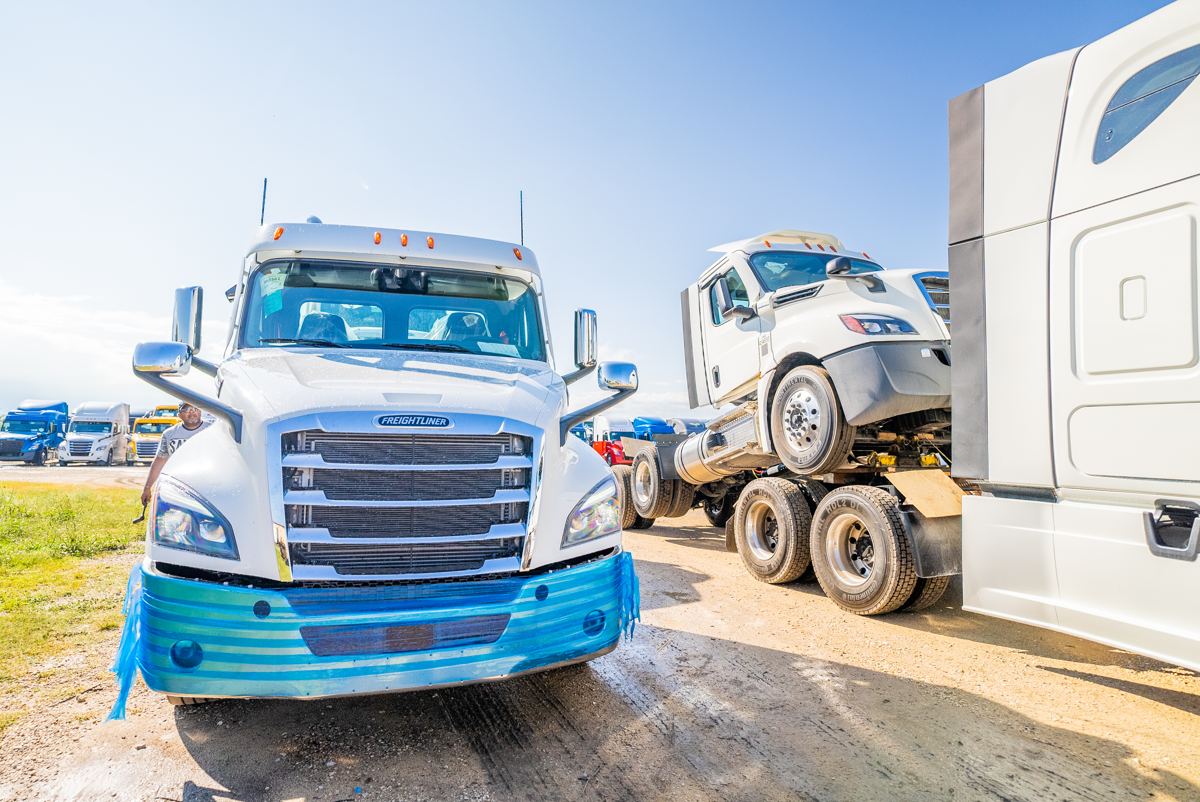
What Is Driveaway Trucking? The Truck Is the Freight
In traditional trucking, you haul the load. In driveaway, you drive it. There’s no trailer to inspect, no pallets to count, and no dock door to wait on. The unit you’re driving is the delivery, and your job is to get it there safely, on time, and in the same condition it left in.
That one difference changes almost everything about the job: how you plan your week, how you get paid, and how you get to your next load. If you want the step-by-step version, read how driveaway trucking works from pickup to delivery.
What Kinds of Vehicles Do Driveaway Drivers Move?
Driveaway covers a wide range of commercial vehicles. In a single month, a driver might move:
- New Class 8 tractors headed from the manufacturer to a dealer or fleet
- Used trucks going to auctions, other fleets, or remarketing centers
- Box trucks, delivery vans, and medium-duty work trucks
- Buses, garbage trucks, utility trucks, and emergency vehicles like fire trucks
Some drivers move one vehicle at a time. Others move several at once using specialized setups. Our guide to the types of driveaway work breaks down each option.
Singles, Deck, Boom, and Specialty
- Singles: One driver, one vehicle, point A to point B. See singles driveaway for details.
- Deck driving: Multiple trucks connected together and moved as one load. It takes extra training. Learn more about deck driving in driveaway.
- Boom driving: Specialized boom equipment connects multiple units so one driver can move them together.
- Specialty: Buses, fire apparatus, refuse trucks, and other vehicles that need a professional behind the wheel.
Who Needs Driveaway Drivers?
Truck manufacturers, dealers, upfitters, leasing companies, and large fleets all need vehicles moved. Often it makes more sense to drive a truck to its destination than to load it on a trailer. That steady need is what keeps experienced driveaway drivers busy.
Why Drivers Choose Driveaway Trucking
- No freight to handle. No loading, unloading, or waiting on a forklift.
- Variety. A different truck, a different route, and often a different part of the country every trip.
- More control. Many driveaway drivers choose loads from what’s available instead of being forced into dispatch.
- Room to grow. Drivers who add deck or boom training can open the door to more specialized loads.
It isn’t for everyone. Once you drop the truck, you need a way to your next pickup, and planning that trip is part of the job. Our driveaway vs. traditional trucking comparison lays out the tradeoffs honestly.
How Norton Transport Fits In
Norton Transport is The Home of Driveaway Trucking. Our tagline sums it up: Drive Trucks. Not Freight. Norton delivers single, deck, and boom loads throughout the US and Canada, and works with independent drivers who want to put their commercial experience to work moving the vehicles themselves.
Norton drivers also don’t have to figure out the trip home alone. Norton has a dedicated in-house travel department that works like a travel agency within the company, helping plan every step of your trip home or to your next load.
To drive with Norton, you’ll need at least two years of commercial driving experience in the last five years, plus a clean record. The full list is on our driveaway driver requirements page.
Still asking what is driveaway trucking from a regulatory angle? Driveaway drivers follow the same federal FMCSA hours-of-service rules as other commercial drivers.
Frequently Asked Questions
Is driveaway trucking the same as car hauling?
No. A car hauler loads vehicles onto a trailer and pulls them. In driveaway trucking, the driver drives the commercial vehicle itself to its destination, either on its own or connected to other units in a deck or boom setup.
Do you need a CDL for driveaway trucking?
For most Norton opportunities, you’ll need a valid Class A or B CDL along with commercial driving experience, because you’re moving the commercial vehicles themselves. The exact license needed depends on the vehicle.
How do driveaway drivers get back after a delivery?
Return travel is part of the lifestyle. Drivers plan their way home or to the next pickup after every delivery. At Norton, an in-house travel department helps plan every step of that trip.
Is driveaway trucking a good career?
For experienced drivers who want variety, flexibility, and no freight to handle, it can be a great fit. Drivers who prefer a fixed schedule and the same route every week may be happier in traditional trucking.
Why is it called driveaway?
The name describes the job. The vehicle is driven away from its origin to its destination under its own power instead of being hauled on a trailer.
Hear From Real Driveaway Drivers
Want the unfiltered version? These Six-Figure Trucker podcast episodes feature drivers who do this work every day:
- EP91: Driveaway 101: An Introduction to Driveaway Trucking with John Madewell. John Madewell gives a beginner-friendly introduction to driveaway trucking.
- EP06: The Good Samaritan of Trucking with Reggie Jenkins. Former New York firefighter Reggie Jenkins on bringing a safety-first mindset to driveaway.
- EP133: Shungo Walker Rides Again: 14 Years of Driveaway Wisdom. Shungo Walker shares what 14 years in driveaway have taught him.
If you’ve been asking what is driveaway trucking and whether it’s the right move for you, the best way to find out is to talk with us. Check the requirements, then start your driveaway driver application. Prefer to talk first? Email onboarding@nortontransport.com or call (423) 617-0218.