Singles driveaway means one driver moves one commercial vehicle from pickup to delivery. You inspect the unit, drive it to its destination, complete the paperwork, and travel to your next load. It’s the simplest form of driveaway and a natural starting point for drivers new to moving trucks instead of freight.
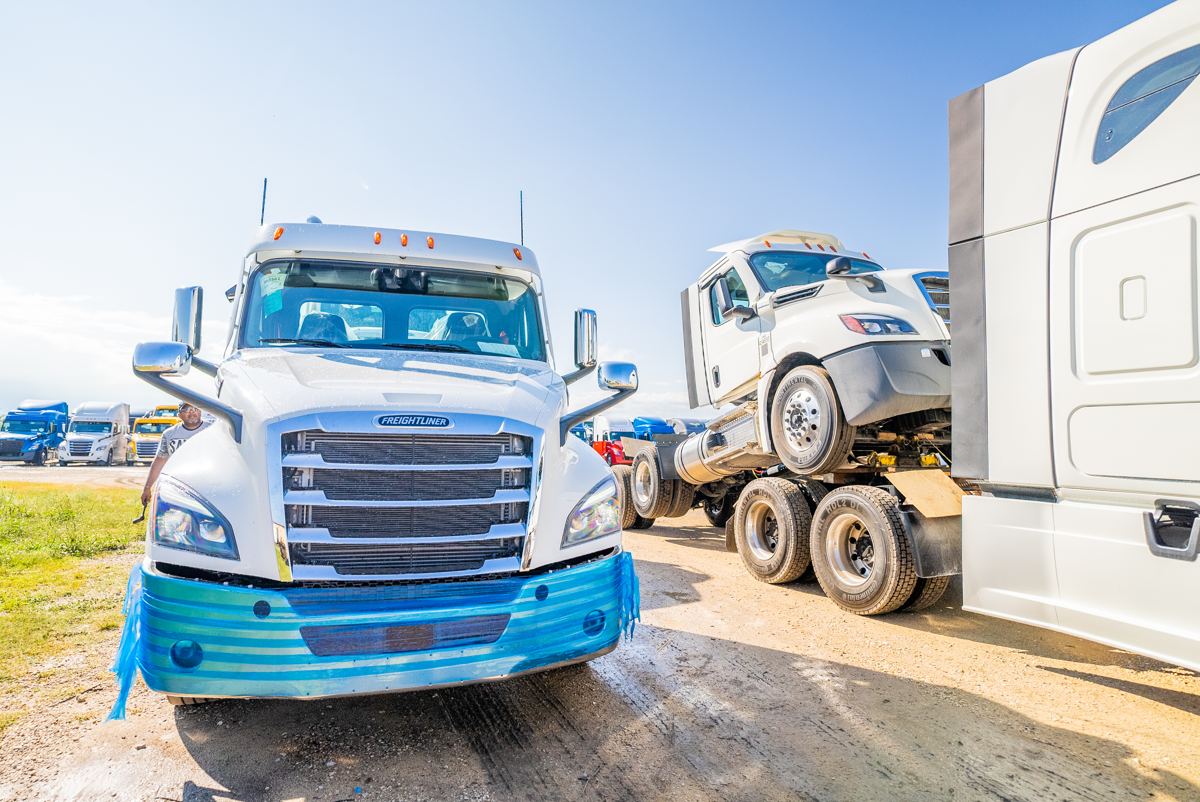
What Singles Driveaway Looks Like
A singles load is exactly what it sounds like: one truck, one driver, one destination. That truck might be a brand-new tractor headed to a dealer, a used unit going to auction, a box truck going to a fleet, or a bus going to a new owner.
A typical singles trip includes:
- Travel to the pickup location
- A pre-trip inspection and condition report
- The drive itself, under hours-of-service rules
- A delivery inspection, signatures, and paperwork
- Travel to the next pickup or home
Want the full play-by-play? Read how driveaway works from pickup to delivery.
Why Many Drivers Start With Singles Driveaway
- Simple setup. No connecting multiple units. You inspect the truck and go.
- You learn the business. Singles teaches inspections, paperwork, and trip planning.
- Variety. Different makes, models, and vehicle types keep the work interesting.
- Flexibility. At Norton there’s no forced dispatch, so you can request loads that fit where you want to go.
The Planning Side of Singles
The drive is the easy part. What separates good singles drivers from great ones is planning. Because you leave the truck at the destination, every load has a second trip attached: getting to the next one.
Experienced singles drivers think about:
- Where the load delivers and what’s near it
- How they’ll get to the next pickup
- Whether a tow-behind setup makes sense for the route, where allowed
- How to keep dead time between loads to a minimum
Norton drivers get help with this. An in-house travel department works like a travel agency within the company and helps plan every step of the trip home or to the next load. Read more in how driveaway drivers get home after a delivery.
Singles vs. Deck and Boom
Singles moves one unit. Deck driving and boom driving connect multiple units so one driver moves several at once. Those configurations take additional training and come with added responsibility. Many drivers run singles while they learn the business, then decide whether multi-unit work fits their goals. See every option in our types of driveaway guide.
Is Singles Right for You?
Singles is a strong fit if you have solid commercial driving experience, enjoy variety, are comfortable traveling, and want to drive trucks instead of hauling freight. Check the driveaway driver requirements to make sure you qualify.
Singles driveaway still means following the same federal FMCSA hours-of-service rules as other commercial driving.
Frequently Asked Questions
What is a singles load in driveaway?
A singles load is one commercial vehicle moved by one driver from its pickup location to its destination, with no other units attached.
Do I need special training for singles driveaway?
Singles requires solid commercial driving experience and a clear understanding of inspections, paperwork, and hours-of-service rules. It doesn’t require the multi-unit equipment training that deck and boom work does.
What kinds of vehicles do singles drivers move?
Singles drivers move new and used tractors, straight trucks, box trucks, buses, and other commercial vehicles, depending on what customers need moved.
How do singles drivers get to their next load?
Singles drivers plan travel from each delivery to the next pickup or home, and some use a tow-behind setup where allowed. At Norton, an in-house travel department helps plan every step of that trip.
Can I move from singles to deck driving later?
Many drivers do. Moving into deck work takes additional training, and it can open the door to more specialized loads.
Hear From Real Driveaway Drivers
Want the unfiltered version? These Six-Figure Trucker podcast episodes feature drivers who do this work every day:
- EP51: Deck Demon vs. Single Love with Jose Palma and Steven Love. Steven Love makes the case for singles in a friendly debate with deck driver Jose Palma.
- EP140: Tow-Behind Success: Chad Gillespie’s Driveaway Formula. Chad Gillespie on how a tow-behind setup fits into his driveaway routine.
- EP165: Tow-Behind Tricks Every Driveaway Driver Should Know with Phillip Miller. Phillip Miller shares tow-behind tips every driveaway driver should know.
If singles driveaway sounds like the right way to start, apply to drive with Norton Transport today. Prefer to talk first? Email onboarding@nortontransport.com or call (423) 617-0218.