There are four main types of driveaway: singles, where one driver moves one vehicle; deck driving, where multiple trucks are connected and moved together; boom driving, which uses specialized equipment to link units; and specialty driveaway, which covers buses, fire trucks, garbage trucks, and other unique commercial vehicles.
New to the business? Start with what driveaway trucking is, then come back here to compare your options.
The Types of Driveaway at a Glance
Singles Driveaway
The simplest form of driveaway. Pick up one commercial vehicle, drive it to its destination, deliver it, and head to your next opportunity. It’s where many drivers learn the rhythm of the business.
Deck Driving
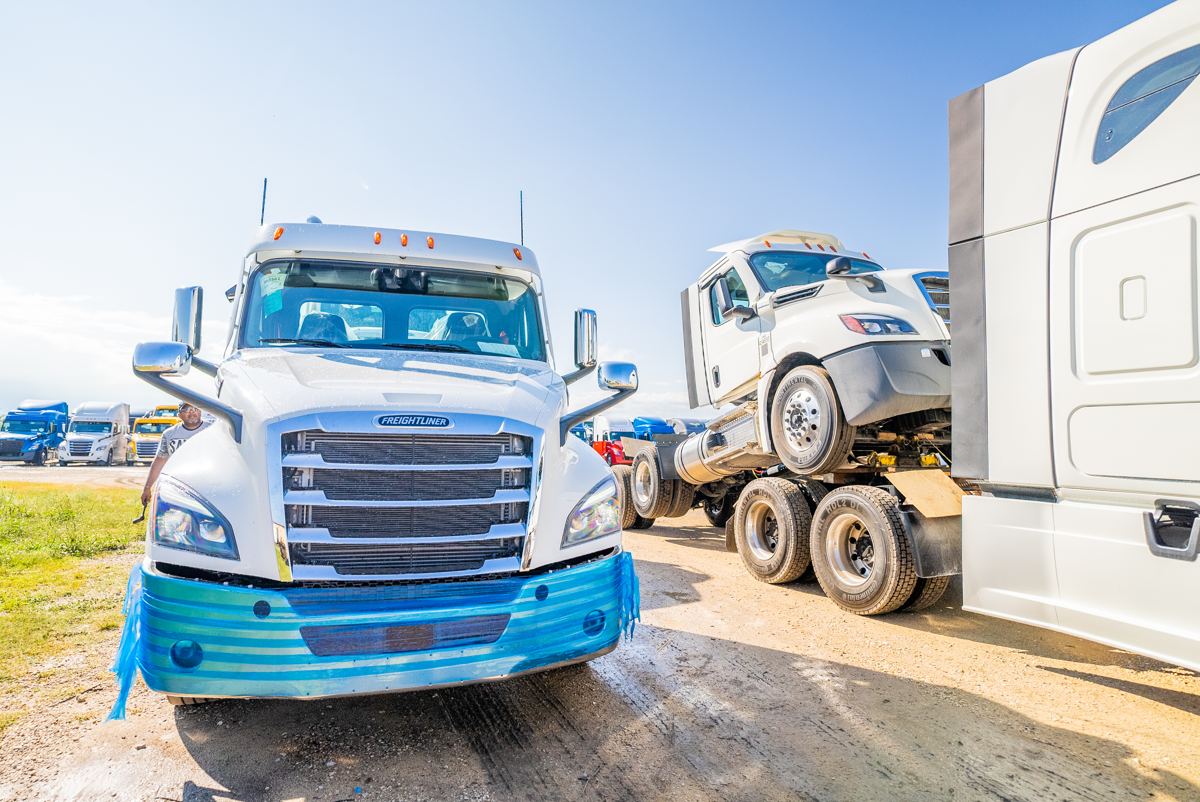
Deck drivers move multiple trucks at once by connecting them in a specialized configuration. It requires additional training and responsibility, and it can open the door to more specialized loads. Ready to look at openings? See deck driver jobs.
Boom Driving
Boom setups use specialized equipment to connect and transport multiple commercial vehicles together. Drivers need specific training to safely assemble, operate, and undeck these loads.
Specialty Driveaway
Not every load is a traditional truck. Specialty driveaway includes buses, garbage trucks, emergency vehicles, utility trucks, and other commercial vehicles that need a professional driver to get them where they’re going.
How to Choose the Right Type
- New to driveaway? Singles is the natural starting point. You learn pickups, inspections, deliveries, and travel planning one unit at a time.
- Want more out of each trip? Deck and boom loads move more units per trip and take added driveaway training.
- Like variety? Specialty loads put you behind the wheel of vehicles most drivers never touch.
Norton delivers single, deck, and boom loads throughout the US and Canada.
Want to go deeper on pay, travel, taxes, and training? Visit our driveaway resources hub.
There are several types of driveaway, but every one of them follows the same federal FMCSA hours-of-service rules as other commercial driving.
Frequently Asked Questions
What is the easiest type of driveaway to start with?
Singles is the simplest. You move one vehicle at a time, which lets you learn inspections, paperwork, and trip planning before taking on multi-unit loads.
Do deck and boom driving require extra training?
Yes. Connecting and moving multiple units safely takes specific training on the equipment and on the setup and breakdown of each configuration.
Can I do more than one type of driveaway?
Many drivers do. A driver might run singles most of the time and take deck, boom, or specialty loads as they gain training and experience.
What vehicles count as specialty driveaway?
Specialty driveaway includes buses, garbage trucks, fire trucks and other emergency vehicles, utility trucks, and other commercial vehicles that don’t fit the standard tractor mold.
Hear From Real Driveaway Drivers
Want the unfiltered version? These Six-Figure Trucker podcast episodes feature drivers who do this work every day:
- EP51: Deck Demon vs. Single Love with Jose Palma and Steven Love. Jose Palma and Steven Love go head to head on deck driving versus singles.
- EP10: The Boom King with Joe Bockenstette. Joe Bockenstette, the Boom King, on life as a boom driver.
- EP178: The Firetruck Guy of Driveaway with Durville Christopher. Durville Christopher, the firetruck guy of driveaway, on specialty deliveries.
Whichever types of driveaway fit you best, the first step is the same: apply to drive with Norton Transport. Prefer to talk first? Email onboarding@nortontransport.com or call (423) 617-0218.