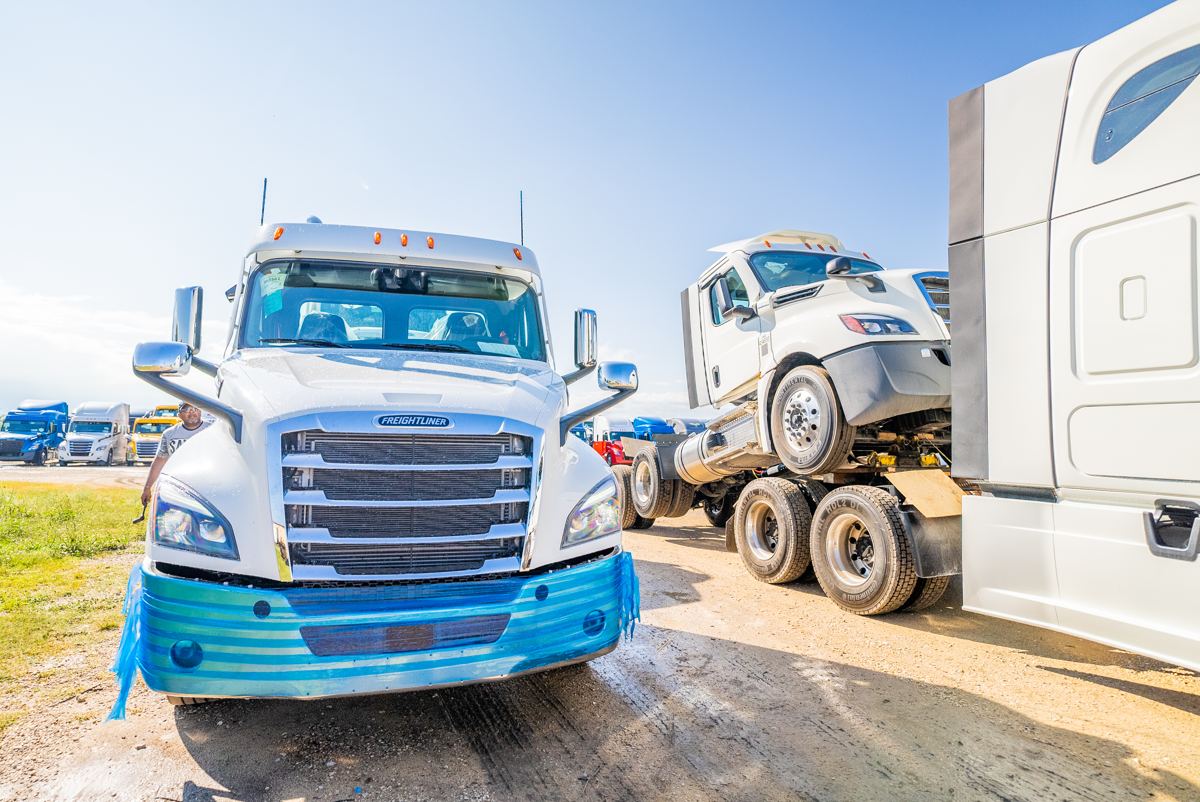
Driveaway onboarding prepares experienced commercial drivers to move vehicles as freight. It typically covers inspections and condition reports, paperwork, hours-of-service and logging, load planning, and safe handling of unfamiliar vehicles. New Norton drivers are placed with a dedicated onboarding dispatcher who coaches them on the Norton way. Drivers who move into deck or boom work get additional hands-on coaching on assembling, operating, and undecking multi-unit loads.
What Driveaway Onboarding Covers
- Inspections: Documenting every unit’s condition at pickup and delivery
- Paperwork: Condition reports, delivery receipts, and load documents
- Logging: Hours-of-service rules and keeping logs in the Motive app
- Load planning: Using Norton’s online tools and your dispatcher to plan loads and move efficiently between them
- Vehicle handling: Adapting quickly to new makes, models, and configurations
- Tools and communication: Using your carrier’s systems to request loads and stay in touch with dispatch
Onboarding for Singles
Singles drivers already have the core driving skills. Onboarding focuses on what’s different about driveaway: inspections, documentation, logging, and travel. Many drivers start here before considering multi-unit work.
Expect to spend time getting comfortable with your carrier’s systems, too. Norton drivers use online tools to request loads, check assignments, communicate with dispatch, and review their pay, so learning those tools early makes your first weeks run smoother. The more automatic the routine becomes, the more attention you have left for the road.
Deck and Boom Driveaway
Multi-unit loads require additional driveaway skills. Deck driving coaching covers how to safely mount, secure, drive, and undeck multiple trucks. Drivers new to deck work are paired with an experienced deck driver who evaluates them and shares tips. Boom driving uses different equipment and connection methods, so it requires its own specific skills. Deck and boom work requires additional skills, endorsements, and responsibility. Both involve hands-on physical work and close attention to detail.
Norton’s Approach
Norton carefully reviews every driver who applies to make sure they have the proper credentials and experience. New drivers start with a dedicated onboarding dispatcher who coaches them on the Norton way. Once you’re driving, you have a dedicated dispatch team and 24/7 support, so help is always a call away.
Safety Habits Reinforced
Good driveaway drivers build habits that last a whole career:
- A consistent walk-around on every unit, every time
- Photos and notes for any existing damage
- Extra space and patience in an unfamiliar vehicle
- Honest hours-of-service planning
- Calling dispatch early when something changes
How to Get the Most From Onboarding
- Ask questions, especially the ones you think are basic
- Take notes on each vehicle type and configuration
- Practice your inspection routine until it’s automatic
- Learn from veteran drivers. The podcast below is a great start.
- Don’t rush multi-unit setups. Safety beats speed every time.
Ready to put it into practice? Read our guide to your first driveaway load, review the driveaway driver requirements, and explore more driveaway resources.
Frequently Asked Questions
Do I need experience to become a driveaway driver?
Yes. Experienced commercial drivers already have the core driving skills. Onboarding focuses on what’s different: inspections, paperwork, logging in the Motive app, load planning, and multi-unit setups for deck or boom work.
What does decking include?
Experienced deck drivers cover how to safely assemble, secure, drive, and undeck multiple trucks in a deck configuration, along with the inspections that go with it.
Is booming different than decking?
Yes. Boom driving uses different equipment and connection methods, so it requires its own specific set of skills.
Can new CDL holders get into driveaway?
Norton requires at least two years of commercial driving experience within the last five years, so onboarding builds on existing experience rather than replacing CDL school.
Does onboarding cover getting home after a delivery?
Load planning is part of driveaway, so it’s part of learning the job. At Norton, you plan your loads with Norton’s online tools and your dispatcher, and the in-house travel department books your flights and rentals home or to the next load.
Hear From Real Driveaway Drivers
Want the unfiltered version? These Six-Figure Trucker podcast episodes feature drivers who do this work every day:
- EP127: Mastering Deck Driver Training with Segun Davis. Segun Davis on mastering deck driving.
- EP134: King of the Yard: Shungo Walker’s Next Chapter in Driveaway Trucking. Shungo Walker, deck driver, on his next chapter in driveaway.
- EP67: Driveaway for the Family Man with Erik Salinas. Erik Salinas, deck driver, on driveaway for the family man.
- EP96: Humility on the Highway: Tracy Jackson’s Trucking Masterclass Part 1. Tracy Jackson’s trucking masterclass on humility on the highway.
Driveaway onboarding is where every great driveaway career starts. Apply to drive with Norton Transport and take the first step. Prefer to talk first? Email onboarding@nortontransport.com or call (423) 617-0218.