Here’s how driveaway works in trucking: a customer needs a commercial vehicle moved, the carrier offers the load, and a qualified driver travels to the pickup, inspects the vehicle, drives it to its destination, and completes the delivery paperwork. Then the driver heads to the next pickup or home, and the cycle starts again.
If you’re brand new to the idea, start with what driveaway trucking is. If you already know the basics, here’s the full picture.
How Driveaway Trucking Works, Step by Step
1. A Load Becomes Available
Manufacturers, dealers, leasing companies, and fleets need vehicles moved, and the carrier turns those moves into loads. At Norton, there’s no forced dispatch. Drivers use Norton’s online tools to request loads, check assignments, communicate with dispatch, and review their pay.
2. Travel to the Pickup
Because you’re not starting with a truck under you, you first get yourself to the pickup point. Good drivers plan this leg before they accept the load. Norton has a dedicated in-house travel department that works like a travel agency within the company, helping plan every step of your trip home or to your next load. More on that in how driveaway drivers get home and get to the next load.
3. Inspect and Document the Unit
Before the wheels turn, you do a thorough inspection. Check the vehicle’s condition, note any existing damage, confirm lights, tires, brakes, and fluids, and complete the condition report. On deck or boom loads, you also make sure every connection is set up correctly and secured.
4. Drive It to the Destination
Then you drive. You’re responsible for the unit the whole way, so you drive it like it’s yours. Hours-of-service rules still apply. Driveaway operations where the vehicle being driven is the shipment are generally exempt from the federal ELD mandate, so many drivers keep paper logs.
5. Deliver and Close Out
At delivery, you do a final inspection with the receiver, note the condition, get signatures, and submit your paperwork. Once that’s done, the load is complete.
6. Line Up the Next One
Most experienced drivers already have their next load in mind before they drop the current one. The less dead time between loads, the more productive your week. Our guide to your first driveaway load covers this cycle in more detail.
What Makes Driveaway Different Day to Day
- No freight handling. You never touch cargo because the truck is the cargo.
- New equipment every trip. You’ll adapt to different makes, models, transmissions, and configurations.
- Travel is part of the job. Getting to pickups and home again is built into every load.
- Pay is tied to the miles you run. Norton pays by the mile, with same-day pay. See driveaway driver pay for more.
Singles vs. Multiple Units
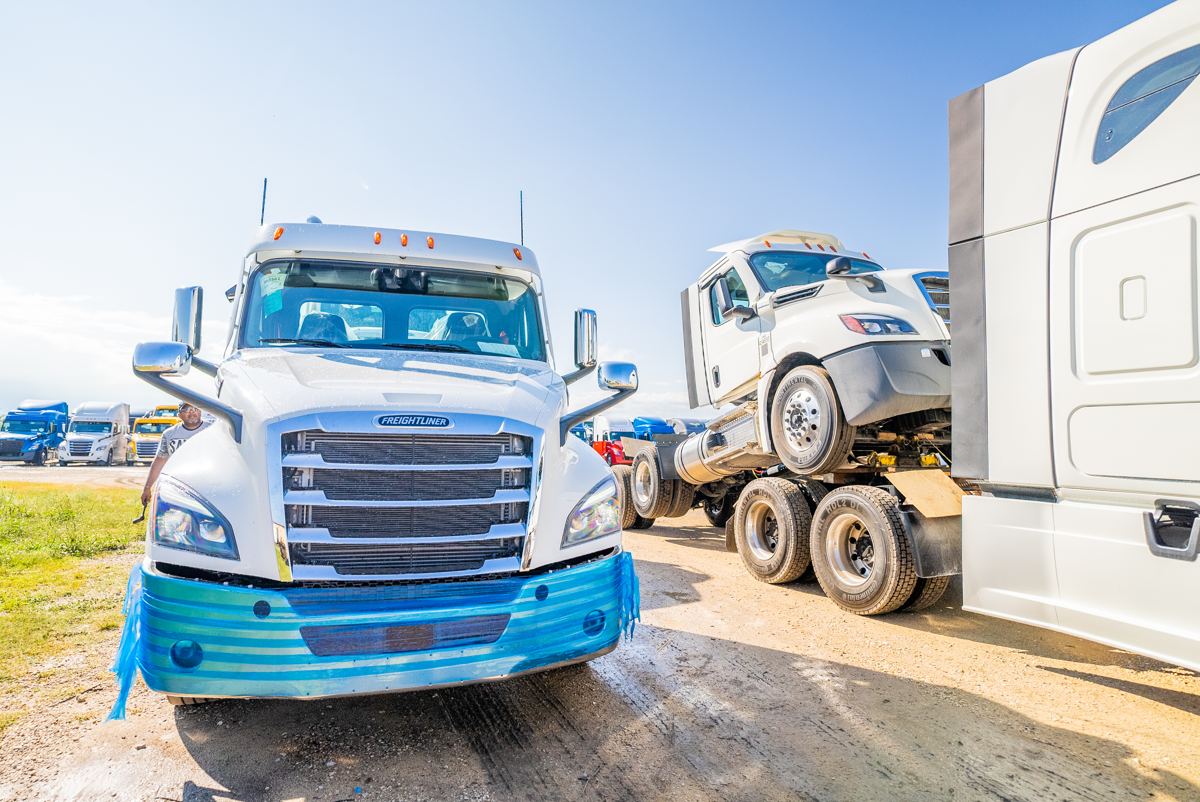
A singles load is one vehicle. A deck or boom load connects several trucks so one driver moves them together. Deck and boom work takes additional training and comes with more responsibility. Compare the options in our guide to the types of driveaway.
You’re Not Alone on the Road
Even though you often run solo, you have a team behind you. As a Norton driver, you get a dedicated dispatcher who knows you by name, 24/7 support, and an in-house travel department that helps plan your trips between loads.
Part of how driveaway works is following the same federal FMCSA hours-of-service rules as any other commercial driver.
Frequently Asked Questions
How do driveaway drivers find loads?
It depends on the carrier. At Norton, there’s no forced dispatch. Drivers request the loads they want using Norton’s online tools, which gives them more control over where and when they run.
Do driveaway drivers use ELDs?
Driveaway operations where the vehicle being driven is the shipment are generally exempt from the federal ELD mandate, so many drivers use paper logs. Hours-of-service rules still apply either way.
What happens if the truck has a problem during the trip?
Stop, make it safe, and contact your carrier. Because the vehicle belongs to the customer, repairs and roadside service are coordinated through the carrier rather than handled on your own.
How long does a typical driveaway load take?
It varies with distance, the type of load, weather, and hours-of-service limits. A short regional move might take a day, while a cross-country delivery can take several days.
Do I have to inspect the vehicle myself?
Yes. Pickup and delivery inspections are a core part of driveaway. Documenting the vehicle’s condition protects you, the carrier, and the customer.
Hear From Real Driveaway Drivers
Want the unfiltered version? These Six-Figure Trucker podcast episodes feature drivers who do this work every day:
- EP120: Precision Planning: Peter Rizzo’s Formula for Driveaway Success. Peter Rizzo explains the planning habits behind consistent driveaway runs.
- EP115: Trust and Teamwork: Inside Raphael Hempstead’s Partnership with His Dispatcher. Raphael Hempstead on building trust and teamwork with his dispatcher.
- EP181: New to Driveaway, Not New to Hustle with Sherrod Henry. Sherrod Henry on what it’s like to be new to driveaway.
Now that you know how driveaway trucking works, see if you qualify and apply to drive with Norton Transport. Prefer to talk first? Email onboarding@nortontransport.com or call (423) 617-0218.